
Orthodontics
Assessment of tooth alignment and bite, with a discussion of orthodontic treatment options. A plan follows an examination.
Experience and ongoing education
We provide selected orthodontic treatments according to clinical findings and our training. Experience and continuing education help us assess which cases we can manage and when specialist assessment is needed.
Fixed braces at the heart of our approach
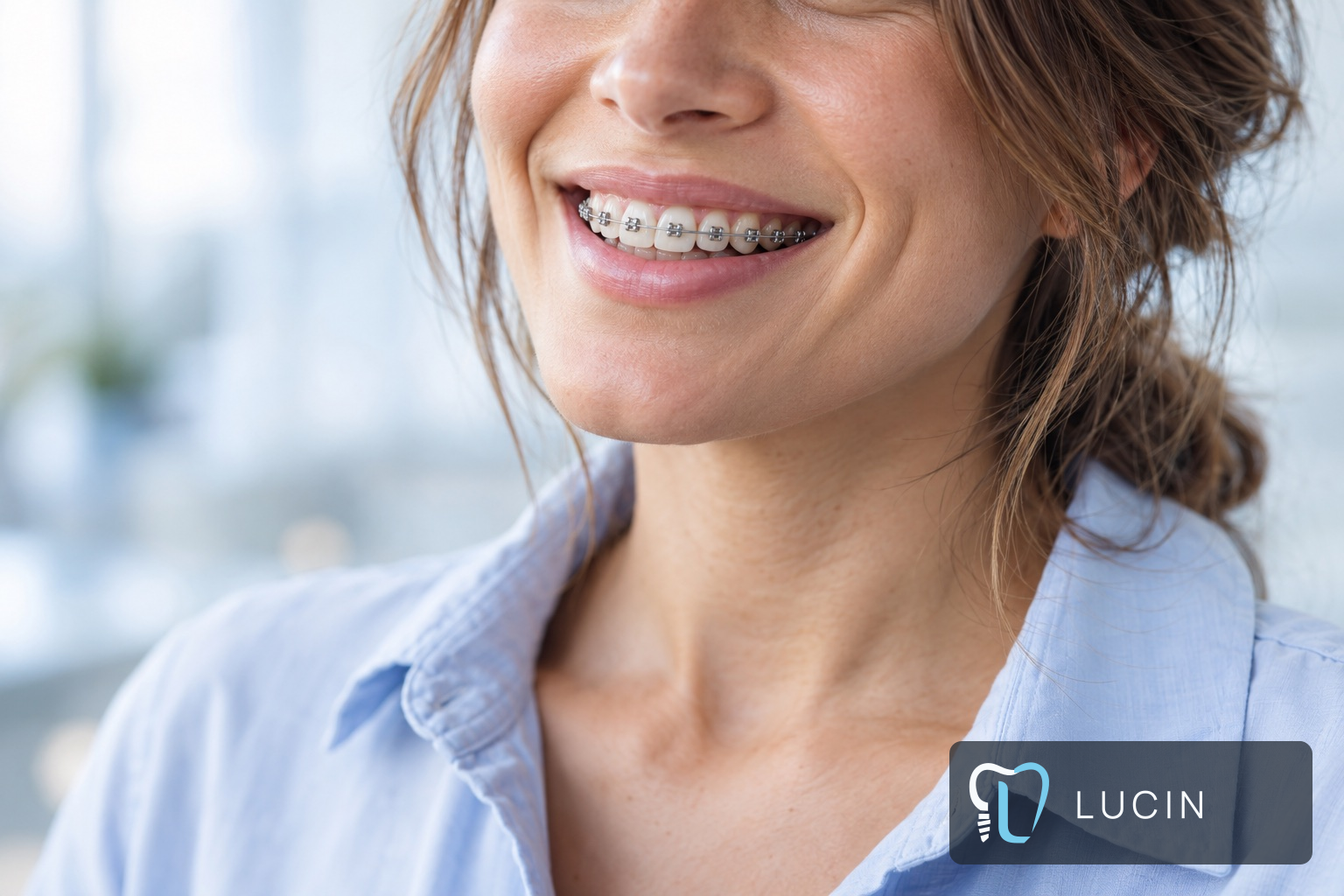
At our practice, we give preference to fixed orthodontic treatment with brackets. It is the foundation of our approach to tooth alignment and bite correction. Following an examination, we assess the findings, define the goals and explain the proposed treatment plan.
Monitoring the transition from baby teeth
For children, we monitor the transition from baby teeth and the development of the bite. We aim to identify irregularities in time and assess when treatment should begin.
Aligners — an additional option for selected cases
We consider in-house aligners when a patient specifically wants this type of treatment and our assessment confirms that their irregularity is suitable for it. We do not present aligners as our first choice or as a replacement for fixed braces in every situation. If they are unsuitable for the agreed goals, we explain this clearly and recommend an appropriate approach.
A smile in six months — when is that realistic?
Six Month Smiles is the commercial name of an orthodontic system. The name sounds like a simple promise, but six months is not a deadline that applies to every patient. The key question is not just “do you offer that method?”, but “is that scope of treatment appropriate for my findings?”.
Here we explain Six Month Smiles as a term patients ask about; mentioning it is not an offer of treatment under that brand. We propose an individual orthodontic plan based on clinical findings.
In selected mild irregularities, and sometimes moderate ones, alignment may be achieved in around six months. During the initial “level and align” phase, teeth are aligned and their heights levelled. However, straightening the front teeth does not necessarily complete a comprehensive bite correction. Limited treatment is appropriate only when its goals suit the findings and its possibilities and limitations are clearly explained.
A marketing name cannot replace a diagnosis. We plan around tooth alignment, the bite, supporting tissue health, and your needs and wishes. We estimate duration after an examination; braces are not removed merely because six months have passed, but after assessing whether the agreed goals have been reached.
Retention: maintaining the result
Active treatment is followed by retention to maintain tooth positions with retainers. This is not simply a brief final phase: the retainer type, wearing schedule, duration and follow-up are determined individually, with long-term maintenance in mind.
Who provides treatment, and when is a specialist needed?
Ante Lucin, is a dentist with many years of experience and additional education in orthodontics; he is not a specialist orthodontist.
We provide selected orthodontic treatments within our training and experience. As in other areas of dentistry, recognising the boundary between cases we can manage and those requiring specialist assessment is important.
For more complex tooth or jaw discrepancies, more complex planning needs, or findings beyond our scope of work, we recommend assessment by a specialist orthodontist. This decision is based on individual findings rather than a fixed percentage of patients. Our aim is to identify an appropriate plan and a professional equipped to meet your treatment needs.